How to Plan Seasonal Tasting Menus at Home: A Private Chef's Guide
Learning how to plan seasonal tasting menus at home starts with a simple truth: the best evenings are built around what is actually in season, not what looks impressive on paper. Interestingly, 67% of diners now say they want more than a standard meal, favouring themed dinners and at-home tasting experiences over anything predictable.
At Blas, we plan seasonal tasting menus at home for a living, and we know the difference between a menu that feels considered and one that feels like a checklist of courses. This guide walks through the same thinking we bring to every private chef booking, whether that is an intimate table for two or a full wedding morning celebration.
Key Takeaways
Start with the season, not the recipe. Choose ingredients first, then build courses around what is genuinely at its best right now.
Five to seven courses is the sweet spot. Enough to feel generous, not so much that guests are worn out by the finish.
Plan for table time. A seven-course seasonal tasting menu at home typically needs around 150 minutes from first course to last.
Treat dietary requirements as design parameters. Building them into the menu from the start avoids last-minute substitutions.
A private chef removes the pressure of plating under pressure. See our pricing guide for how packages compare.
Small plates suit intimate groups. A miniature, detail-led approach often works better than large-format courses for four to six guests.
Wine pairing adds perceived value. A considered pairing can lift the whole experience without adding extra courses.
What Is a Seasonal Tasting Menu, and Why Plan One at Home?
A seasonal tasting menu is a sequence of small, deliberate courses that follow the rhythm of what is growing, grazing, or being landed that particular week. It is not a shrunk-down version of a three-course dinner.
Planning one at home means the same intention, without the restaurant markup or the need to leave your own dining room. The most admired home dining experiences blend polished presentation with warmth and ease, avoiding rigid formality in favour of genuine connection.
That balance, refined but relaxed, is really the whole point of learning how to plan seasonal tasting menus at home rather than simply booking a table out.
How to Plan Seasonal Tasting Menus at Home: Start With the Season
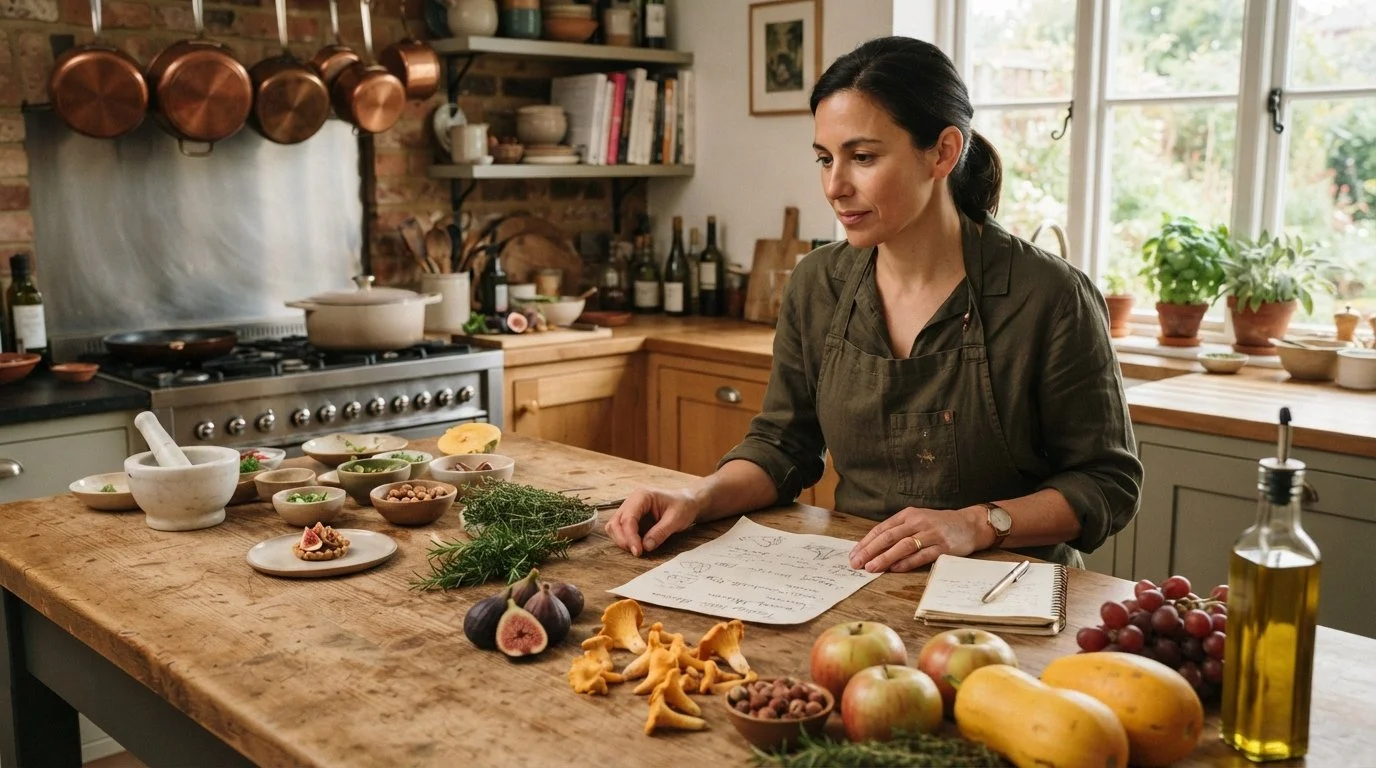
Every good seasonal tasting menu begins with produce, not ambition. Before you think about courses or presentation, look at what is genuinely at its peak.
In Scotland, that might mean early summer asparagus and Ayrshire new potatoes, or autumn game and heritage root vegetables. Building a menu this way, ingredient outward rather than idea inward, is the single most useful shift when planning a seasonal tasting menu at home.
Spring: new season lamb, wild garlic, early greens, rhubarb.
Summer: west coast seafood, soft fruit, salad leaves, herbs at their most fragrant.
Autumn: game, mushrooms, squash, orchard fruit.
Winter: root vegetables, slow-cooked cuts, citrus for contrast, warming spice.
Once the produce is chosen, the courses tend to write themselves.
Choosing Ingredients Drawn From Scotland's Finest Produce
Every menu we build is bespoke, drawn from Scotland's finest seasonal produce, whether that is west coast seafood, heritage vegetables, or grass-fed beef. That same principle applies at home.
Source from a butcher, fishmonger, or greengrocer who can tell you where something came from and when it was picked or landed. Provenance is not a luxury detail, it is what gives a seasonal tasting menu its actual flavour.
If you are hosting near the coast or planning a retreat, our private chef service at Loch Lomond shows how local sourcing and setting work together for a genuinely seasonal menu.
How Many Courses Should a Seasonal Tasting Menu Include?
This is the question we are asked most often when guests are planning their own seasonal tasting menu at home. The honest answer is fewer than most people assume.
Did You Know?
5 to 9 courses is considered the ideal length for a tasting menu, generous without becoming excessive for the guest.
Source: Happy Chef
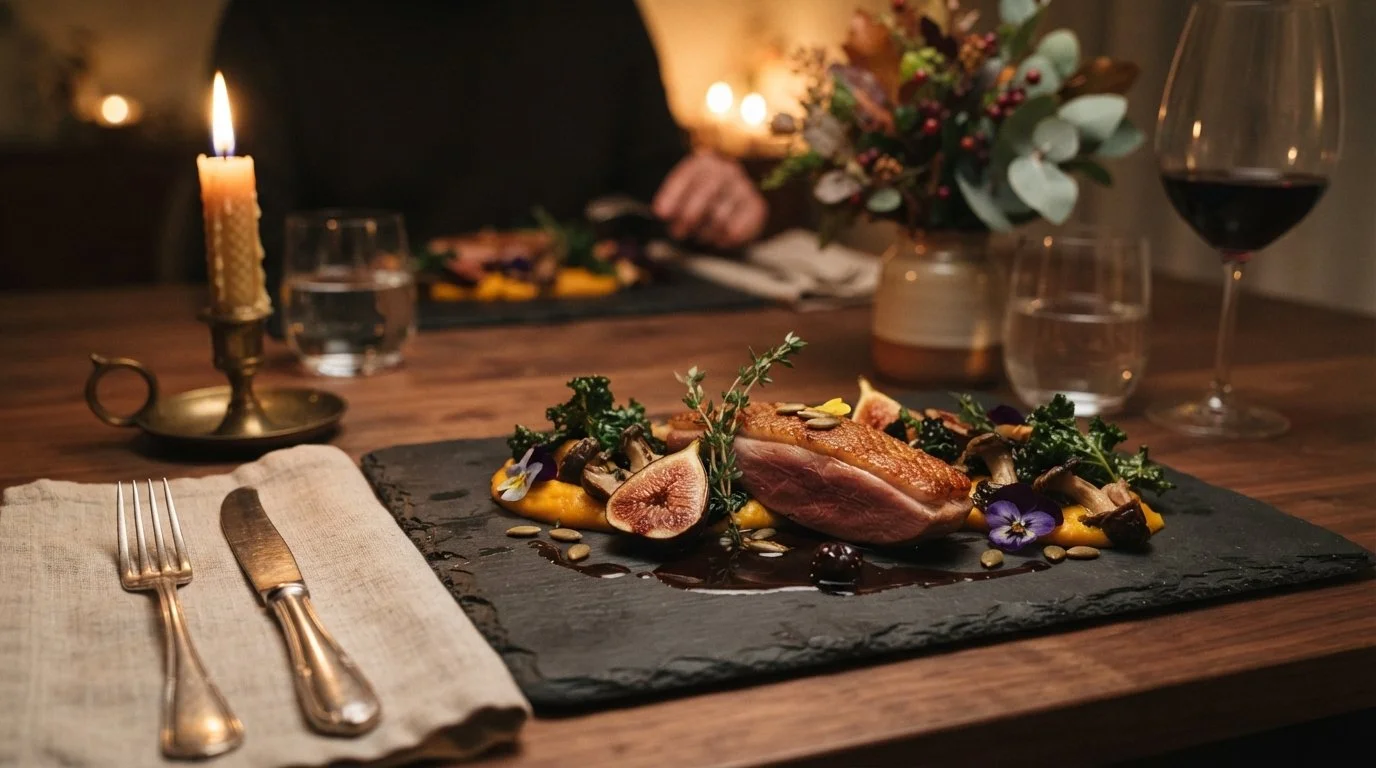
For a home setting, five to seven courses gives enough variety without exhausting the kitchen or the guests. Each course should be small: two or three considered bites, not a full plate in miniature.
| Course Count | Best For | Approx. Table Time |
|---|---|---|
| 3 to 4 courses | Weeknight or casual gatherings | 75 to 90 minutes |
| 5 to 6 courses | Intimate dinner parties | 100 to 130 minutes |
| 7 courses | Celebrations and special occasions | Around 150 minutes |
Timing and Flow: How to Plan Seasonal Tasting Menus at Home Without Rushing
The single biggest mistake home hosts make is under-planning the pacing. A seasonal tasting menu lives or dies on rhythm, not just flavour.
Space courses ten to fifteen minutes apart, allowing conversation to breathe between plates. Prepare cold or make-ahead courses first, so the kitchen is free for whatever needs last-minute attention.
Every detail considered. Every course crafted.
That is the standard we hold ourselves to on every booking, and it is the same standard worth aiming for at home, even on a smaller scale.
Working With a Private Chef vs Planning It Yourself
There is a real difference between hosting a seasonal tasting menu yourself and having a private chef manage it for you. Cooking it yourself means shopping, prepping, plating, and serving, often while your own guests wait at the table.
A private chef changes that dynamic entirely. Each event is personal, and from the moment we arrive, the host becomes a guest at their own table.
No compromises, just convenience, elevated. If you are weighing up the two approaches, our private chef service in Glasgow is a useful starting point for comparing what full-service seasonal dining looks like against doing it solo.
Pairing Drinks With Your Seasonal Tasting Menu
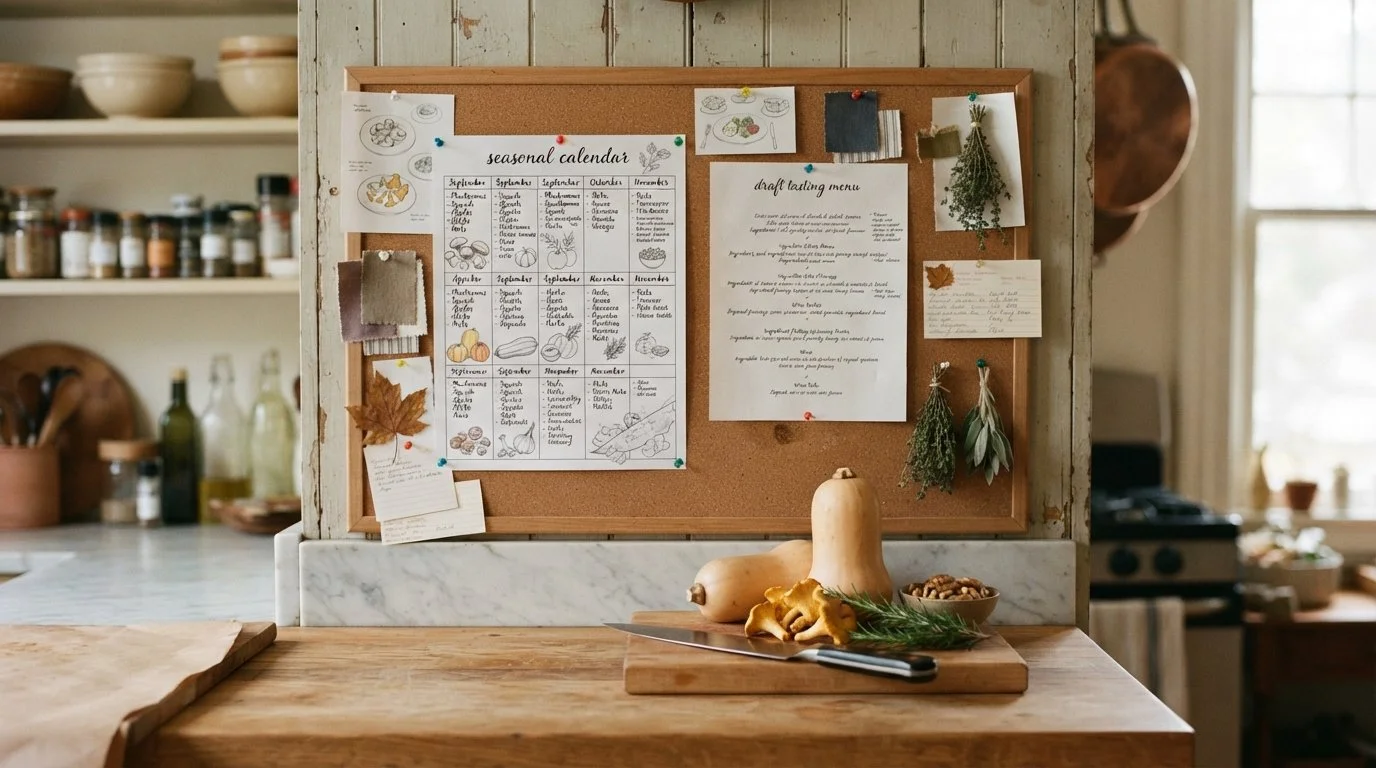
A wine pairing does more than fill glasses. It can lift the whole feel of the evening and the perceived value of every course served.
Match lighter wines to early courses and build weight as the menu progresses. Waiters pouring wine and setting out a dining table: attentiveness and warmth are the gold standard, and that same care translates well to a home setting, even without formal service.
Dietary Requirements as Design Parameters
Dietary requirements are not an inconvenience to work around after the menu is finished. They are design parameters, and building them in from the first course makes for a far stronger seasonal tasting menu at home.
Did You Know?
83% of people believe eating with others is better for their mental health, underlining why hosted seasonal menus matter.
Source: HelloFresh
Ask about allergies and preferences at the invitation stage, not the week of the dinner. A well-designed vegetarian or gluten-free course should feel like a genuine part of the menu, not a substitution tacked on at the end.
Miniature Luxury: Small Plates for Intimate Seasonal Menus
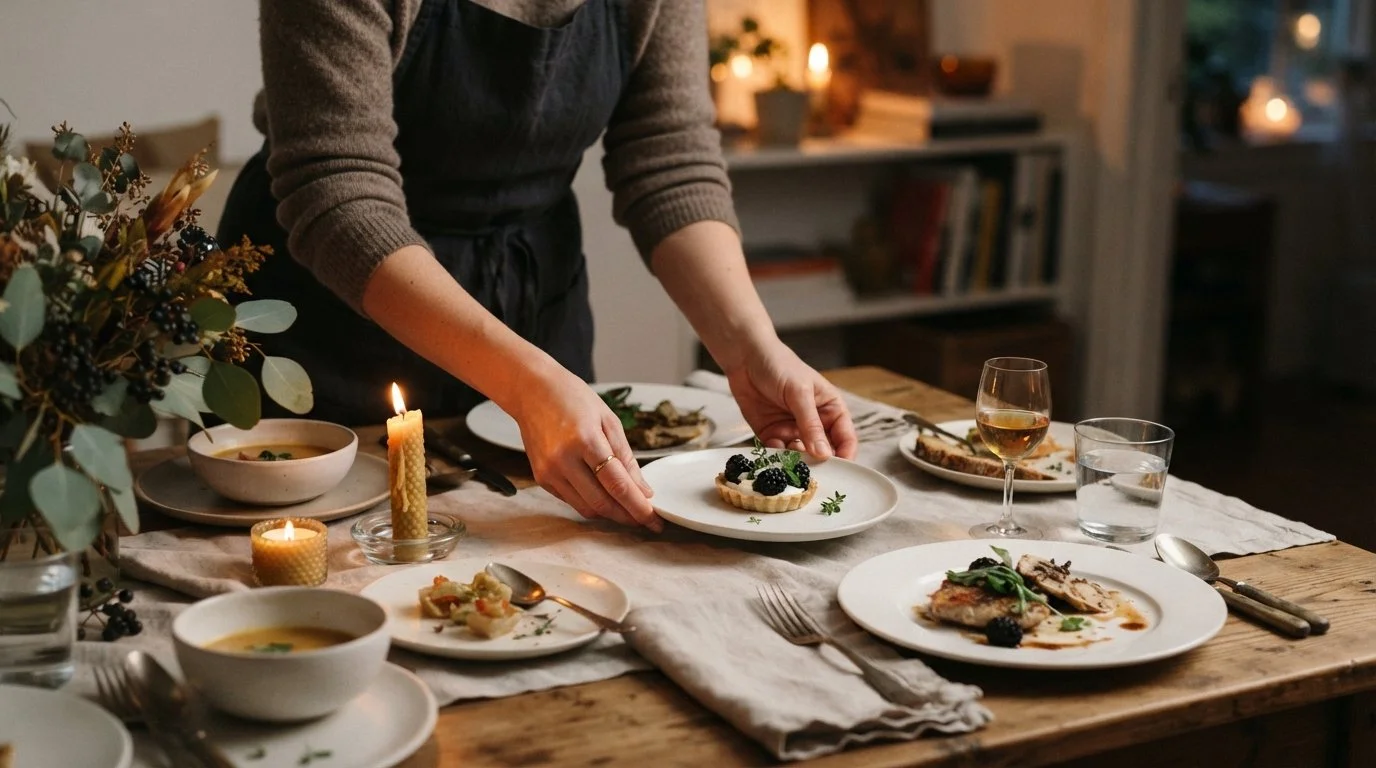
For groups of four to six, the miniature luxury approach tends to outperform large-format courses. Small, high-detail plates let every ingredient be seen and tasted properly, without overwhelming the table.
This is particularly true for a seasonal tasting menu, where the point is variety across the season rather than volume on the plate. A sentence or two about what is being served, particularly the key ingredients, adds warmth and connects guests to the food without turning it into a lecture.
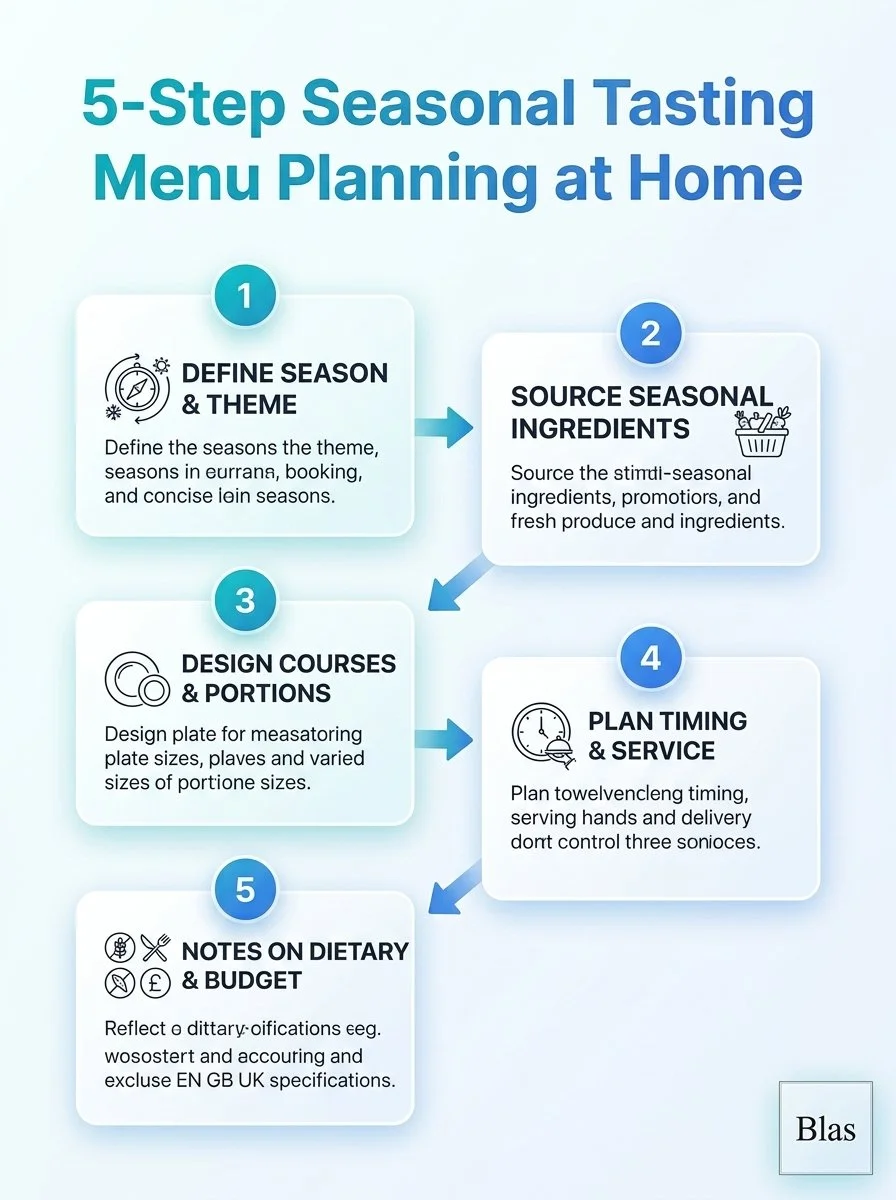
Discover a practical 5-step method to plan seasonal tasting menus at home. From choosing a theme to timing and plating, this guide simplifies home entertaining.
Setting the Table and the Etiquette of Home Dining
Private dining etiquette and service at home is not about recreating a restaurant in your living room. It is about hosting with grace, keeping the atmosphere warm rather than stiff.
From a small table of friends gathered over scallops and candlelight, to a private tasting menu where every course tells a story of the season, everything is designed with care, restraint, and intention. Lighting, spacing between guests, and unhurried pacing matter as much as the food itself.
For a wedding morning specifically, a lighter, more relaxed format works best. Light, elegant, and designed to start the day beautifully, our Wedding Morning by Blas service (from £21pp, minimum 10 guests) shows how a seasonal, considered menu can suit even the most time-pressed morning.
Booking a Private Chef for Your Seasonal Tasting Menu
If planning a seasonal tasting menu at home starts to feel like more than you want to manage alone, a private chef takes on the shopping, the prep, the service, and the clearing away. From the moment we arrive, everything is taken care of, from preparation to service and clearing away at the end.
Our founder, Darren Morton, brings a background from The Savoy and five-star venues to every booking, which is where the current standard of grace at Blas comes from. You can read more about that history on our founder's page, or browse guest experiences on our reviews page before booking.
For those closer to the capital, our private chef service in Edinburgh follows exactly the same seasonal, ingredient-led approach described throughout this guide.
Let the Season Lead the Menu
Learning how to plan seasonal tasting menus at home does not require professional training, only a willingness to let the season lead the menu rather than the other way round. Start with what is genuinely in season, keep the course count between five and seven, plan the pacing properly, and treat dietary needs as part of the design rather than an afterthought.
Whether you plan it yourself or bring in a private chef to manage the evening, the goal stays the same: a table that feels considered, seasonal, and genuinely enjoyable to sit at. If you would like help with the next one, our intimate dining guide is a good next stop, or you can get in touch directly through our contact page.
Frequently Asked Questions
How many courses should a seasonal tasting menu at home have?
Most home seasonal tasting menus work best with five to seven courses. This keeps the evening generous without exhausting either the host or the guests, and typically fits into around two to two and a half hours at the table.
What is the easiest way to start planning a seasonal tasting menu?
Start with the produce that is genuinely in season near you, then build courses around those ingredients rather than starting from a recipe. This is the single most useful step in learning how to plan seasonal tasting menus at home.
Is hiring a private chef worth it for a seasonal tasting menu?
A private chef removes the shopping, prepping, plating, and clearing away, letting the host actually sit at their own table as a guest. For anyone hosting a multi-course seasonal menu without kitchen help, it is generally worth the investment for the evening it frees up.
How far in advance should I plan a seasonal tasting menu?
Professional kitchens often start seasonal menu planning around three months ahead to source ingredients properly, though a home host can work effectively with a few weeks of lead time. Testing one or two new dishes four to six weeks before the event helps avoid surprises on the night.
Should I include a wine pairing with a seasonal tasting menu?
A considered wine pairing can noticeably lift both the perceived value and the enjoyment of a seasonal tasting menu. It does not need to be elaborate, matching weight and flavour intensity to each course is usually enough.
How many guests are ideal for a seasonal tasting menu at home?
Four to six guests tends to work best for a home seasonal tasting menu, particularly when using a small plates or miniature luxury format. Larger groups are possible but require more planning around timing and kitchen capacity.
What should I do about guests with dietary requirements?
Ask about dietary requirements when you send the invitation, not the week of the dinner, and build those courses into the menu from the start. Treating dietary needs as design parameters rather than late substitutions results in a stronger, more considered seasonal tasting menu for every guest.