How to Design a Bespoke Menu That Reflects Your Personality and Event Style: A Complete Planning Guide
Your menu is more than a list of dishes. It's a reflection of who you are and the atmosphere you want to create for your guests. A well-designed bespoke menu combines your personal style with thoughtful choices about food, layout, and presentation to make your event memorable.
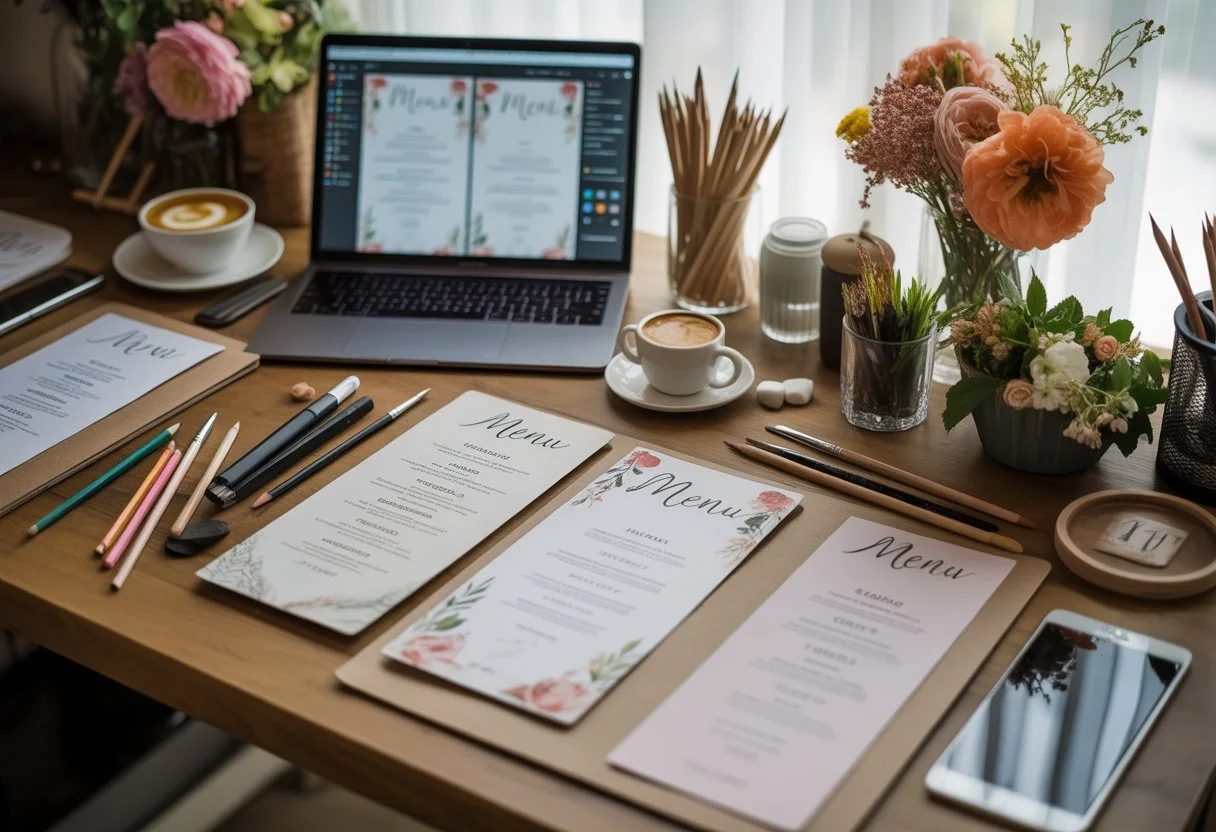
Whether you're planning an intimate dinner party or a large celebration, your menu should tell a story. The dishes you select, how you describe them, and the way you present everything on the page all work together to set the tone.
This guide walks you through the process of creating a menu that feels uniquely yours. You'll learn how to identify your style, structure your offerings, and add the finishing touches that make your menu stand out.
Defining Your Personality and Event Style
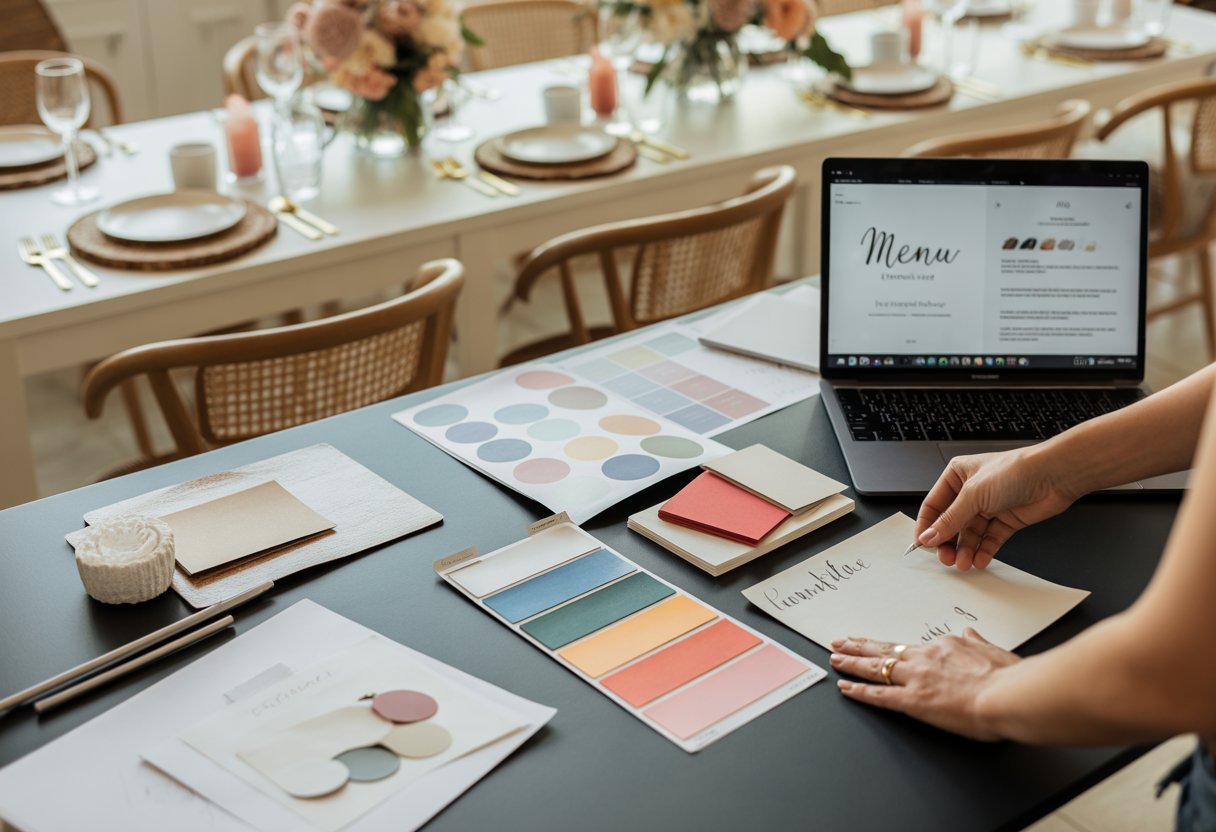
Before creating a bespoke menu, you need to understand what makes your event unique. Your personality traits, values, and the atmosphere you want to create will guide every menu decision, from starter selections to dessert presentations.
Identifying Core Event Themes
Your event theme serves as the foundation for all menu choices. Think about the occasion first—is it a milestone birthday, wedding celebration, or corporate gathering? Each requires a different approach.
Consider the mood you want to set. A garden party calls for light, fresh dishes, whilst a formal gala demands elegant, sophisticated plates. Write down three words that describe your ideal event atmosphere, such as "playful, colourful, relaxed" or "refined, intimate, classic."
Look at your personal interests for inspiration. If you love travel, you might choose a Mediterranean-inspired menu. Art enthusiasts could design plates that look like edible masterpieces. Your hobbies and passions provide authentic themes that feel genuine to who you are.
Translating Personal Values into Menu Concepts
Your values shape how you approach food choices. If sustainability matters to you, focus on seasonal, locally-sourced ingredients. Those who prioritise health might select lighter preparations with fresh vegetables and lean proteins.
Think about your entertaining style at home. Do you prefer sharing platters that encourage conversation, or carefully plated individual courses? Your natural hosting preferences should influence your bespoke menu structure.
Consider dietary inclusivity as a value. Offering vegetarian, vegan, and allergen-free options shows you care about all guests. This doesn't mean compromising on flavour—it means creating diverse dishes that everyone can enjoy.
Your cultural background might also inform menu decisions. Traditional family recipes or heritage cuisines add personal meaning to your event. These choices tell your story through food.
Aligning Menu with Venue Ambience
Your venue sets boundaries and opportunities for your menu. Outdoor garden settings suit casual, fresh dishes like salads and grilled items. Historic mansions pair well with traditional, refined courses.
Match your menu's formality to the space. A rustic barn venue feels awkward with overly formal plated service. Instead, choose family-style sharing dishes or food stations. Modern art galleries complement contemporary fusion cuisine and creative presentations.
Consider practical factors too. Venues without full kitchens limit hot dish options. Spaces with beautiful views might benefit from simpler food that doesn't distract from the setting. Your event style must work within these physical realities whilst staying true to your vision.
Setting Menu Foundations
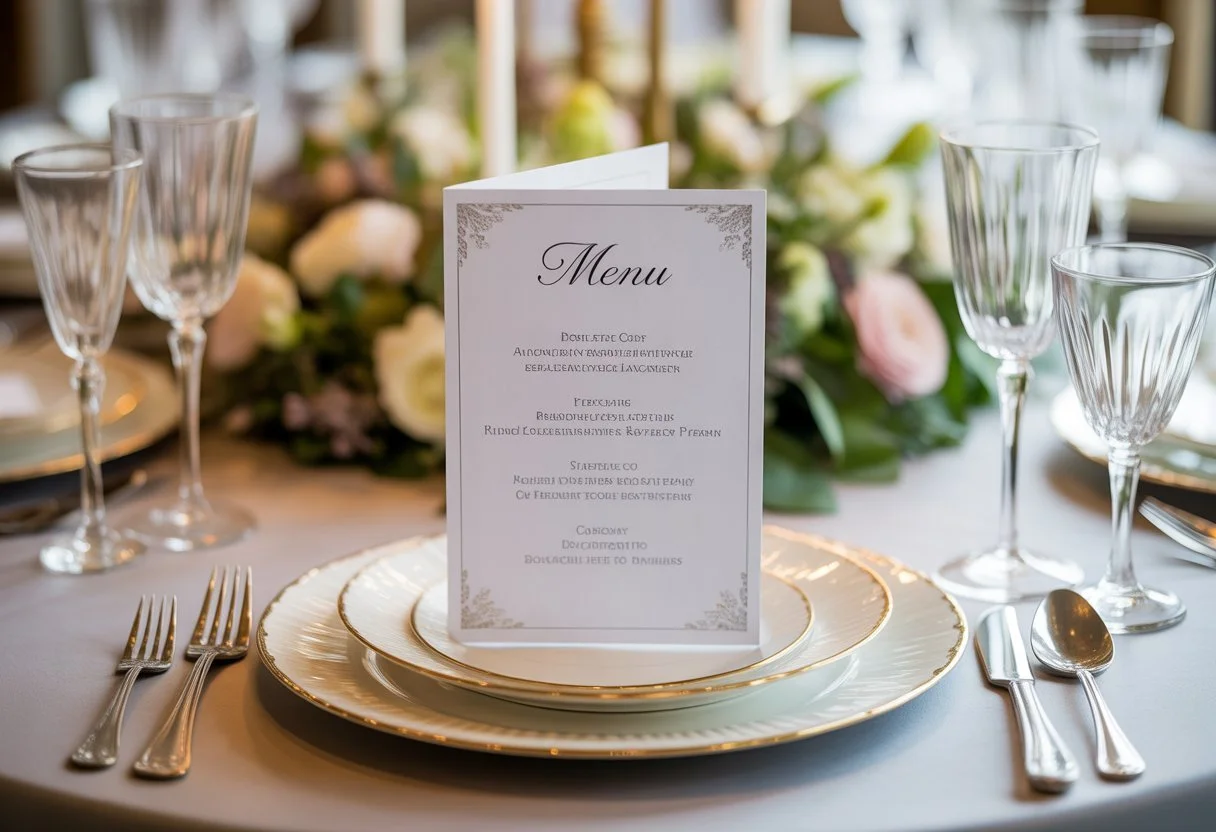
A strong menu starts with knowing your guests' food preferences and working around dietary needs whilst highlighting dishes that make your event memorable.
Understanding Guest Preferences and Food Dislikes
You need to gather specific information about your guests' food preferences before you finalise any menu choices. Send out a simple questionnaire asking about favourite cuisines, ingredients they avoid, and any strong dislikes. This helps you avoid serving mushrooms to someone who can't stand them or fish to guests who won't eat seafood.
Create a spreadsheet to track responses from each guest. Include columns for preferred proteins, vegetables they enjoy, and any ingredients they dislike. This organised approach means you won't accidentally serve someone's least favourite food at your special event.
Consider the age range of your guests when planning dishes. Children often prefer simpler flavours whilst older guests might appreciate more traditional preparations. Your menu should reflect what your specific group will actually enjoy eating, not just what sounds impressive.
Catering for Dietary Restrictions
Dietary restrictions require careful planning and clear communication with your caterer or chef. Common restrictions include vegetarian, vegan, gluten-free, dairy-free, nut allergies, and religious requirements like halal or kosher.
Mark each dish on your menu with clear symbols or labels indicating which dietary needs it meets. You can use a simple key at the bottom showing V for vegetarian, VG for vegan, GF for gluten-free, and DF for dairy-free.
Plan at least one substantial option for each major dietary restriction rather than treating restricted diets as an afterthought. A guest with coeliac disease deserves an equally delicious main course as everyone else, not just a plain salad. Contact guests with severe allergies directly to discuss safe options and confirm ingredients with your supplier.
Incorporating Signature Dishes
Signature dishes give your menu a personal touch that reflects your taste and the event's character. Choose one or two dishes that hold special meaning for you, whether it's a family recipe, a dish from your travels, or something you've perfected over time.
These signature items should stand out on your menu through placement and description. Put them in a prominent position and include a brief note about why they're special to you. This creates conversation amongst guests and makes your event more memorable.
Your signature dishes don't need to be complicated. A perfectly executed simple dish often impresses more than an overly complex creation. Make sure your chosen dishes can be prepared consistently for the number of guests you're serving and that they complement rather than clash with the rest of your menu.
Designing the Menu Structure and Layout
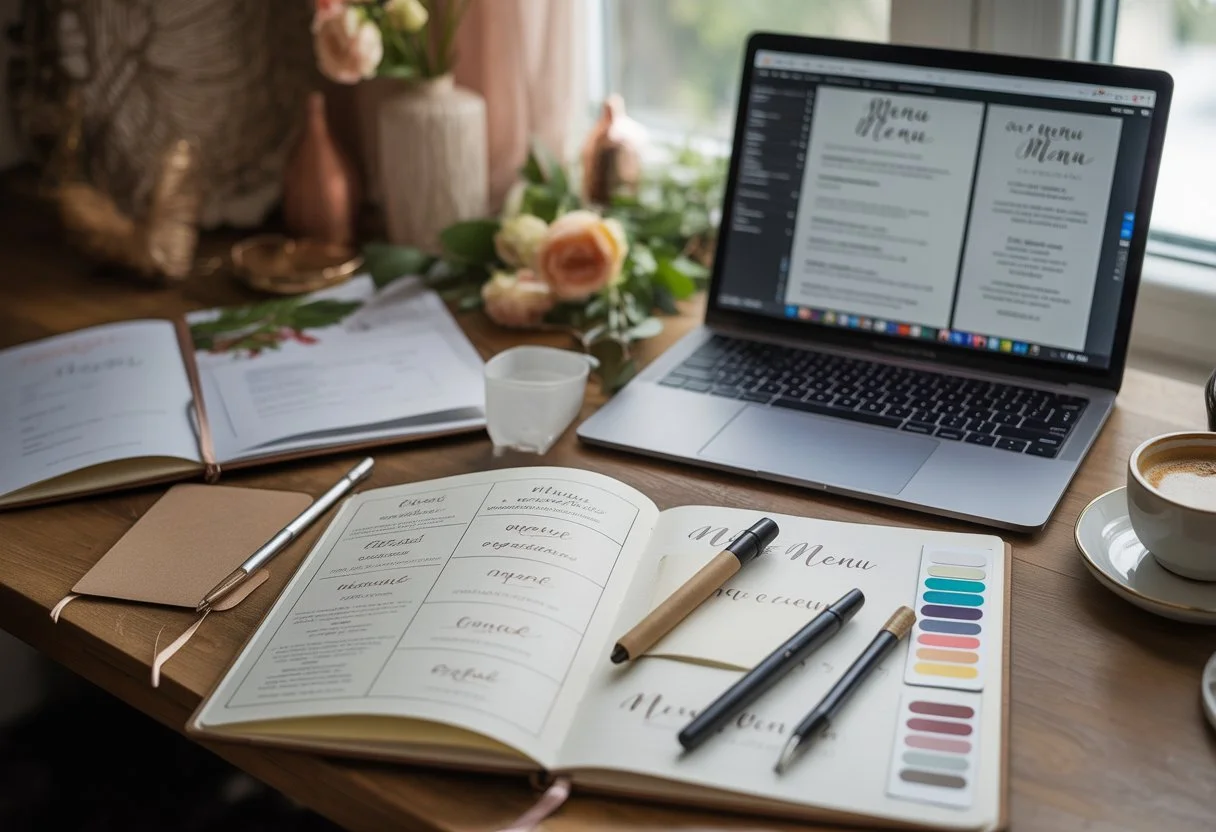
The foundation of effective menu design lies in creating a clear structure that guides your guests through their dining choices. Your layout decisions directly impact how easily people navigate the menu and make selections that align with your event's vision.
Balancing Variety with Focus and Limits
Your menu should offer enough choice to satisfy different tastes without overwhelming your guests. Most professional menus include three to five options per course, which prevents decision fatigue whilst maintaining interest.
Setting clear limits helps you maintain quality and control costs. A focused menu allows your kitchen to prepare each dish properly rather than spreading resources too thin. You should consider your event's duration and formality when deciding quantity.
Think about dietary requirements and preferences within your chosen limit. Include at least one vegetarian option and mark allergen information clearly. This approach shows consideration for your guests without expanding your menu beyond manageable bounds.
Selecting the Right Menu Layout
Single-column layouts work best for shorter menus with fewer than eight items per section. They create a clean, elegant appearance that suits formal events. Two-column layouts accommodate longer menus whilst maintaining readability across the page.
Your menu creator tools often provide templates, but choose based on your content needs first. Grid layouts suit events with multiple small plates or tapas-style service. Linear layouts guide guests through a traditional multi-course meal in sequence.
White space matters as much as the text itself. Leave adequate margins and spacing between sections so the page doesn't feel crowded. Dense text makes even excellent food seem less appealing.
Organising Sections for User Experience
Group items logically by course progression: starters, mains, sides, and desserts. This traditional structure feels intuitive to most guests and helps them plan their meal choices naturally.
Place your signature dishes or recommended items in prominent positions. The top right corner of each section typically draws the eye first. You can use bold text or subtle icons to highlight special items without cluttering the design.
Use clear section headings and consistent formatting throughout. Each category should be distinct but follow the same visual pattern. Include brief descriptions under dish names—one line is usually sufficient to convey key ingredients and preparation methods.
Choosing Visual and Textual Elements
The visual and textual components of your menu work together to create a cohesive design that communicates your event's character. These elements include everything from the template structure to the specific fonts, colours, and images you select.
Customising Menu Templates and Styles
Menu templates provide a starting point for your design, whether you're creating a modern menu for a contemporary celebration or a traditional layout for a formal dinner. Free menu templates are widely available online and offer pre-designed structures you can modify to suit your needs.
Start by selecting a template that matches your event's formality level. A wedding breakfast might require an elegant design with ornate borders, whilst a casual garden party could work with a simple, clean layout.
Customise the template by adjusting the spacing between sections and modifying the arrangement of text elements. Consider whether your menu needs separate sections for courses or if a single-column layout works better. Remove any unnecessary decorative elements that don't align with your vision.
The template's structure should guide your guests' eyes naturally from one section to the next. Use clear headings to distinguish between different courses or menu categories.
Utilising Fonts, Colours, and Imagery
Select no more than two or three fonts for your menu to maintain visual clarity. Pair a decorative font for headings with a simple, readable font for body text. Script fonts work well for formal events, whilst sans-serif fonts suit modern celebrations.
Colours should complement your event's overall palette. Choose a primary colour for headings and accents, then use neutral tones like black, navy, or grey for the main text. Keep contrast high between text and background to ensure readability.
Effective colour combinations include:
Navy text on cream paper
Black text with gold accents
Charcoal grey on white
Deep green with ivory
Add imagery sparingly to avoid cluttering the design. Small illustrations, botanical elements, or a single photograph can enhance the visual appeal without overwhelming the text. Ensure any images relate directly to your event theme or the food being served.
Showcasing Branding and Personality
Your menu should reflect your unique style through carefully chosen design elements. Include personal touches like a monogram, custom illustration, or meaningful pattern that connects to your story or the event's purpose.
Consider adding a brief welcome message or quote that captures the occasion's spirit. This text should be concise—one or two sentences at most—and positioned prominently at the top of the menu.
For branded events or business functions, incorporate your logo subtly into the design. Place it in the header or footer rather than dominating the page. The typography and colour choices should align with your existing brand guidelines whilst adapting to the menu format.
Personal elements might include hand-drawn details, a signature cocktail named after the guest of honour, or a note about special dietary accommodations. These touches demonstrate attention to detail and make guests feel valued.
Seasonality and Regional Touches
Seasonal ingredients and regional specialities transform a standard menu into something memorable that tells a story about place and time. Using what's fresh and local creates authentic dishes whilst supporting nearby producers and reducing costs.
Highlighting Seasonal Ingredients
Seasonal ingredients offer superior flavour, freshness, and value compared to out-of-season alternatives. When you plan around what's naturally available, your dishes taste better and cost less.
Spring brings asparagus, peas, and lamb. Summer offers tomatoes, courgettes, and berries. Autumn provides squash, game, and root vegetables. Winter features Brussels sprouts, parsnips, and citrus fruits.
Benefits of seasonal planning:
Lower ingredient costs due to abundant supply
Better quality produce at peak ripeness
Stronger relationships with local suppliers
Reduced environmental impact from transportation
List seasonal options clearly on your menu with brief descriptions that highlight their freshness. Phrases like "June strawberries" or "autumn wild mushrooms" tell guests exactly what makes each dish special right now.
Designing Rotational or Themed Menus
A rotational menu keeps your offerings exciting whilst maximising seasonal ingredients. You can update your entire menu quarterly or rotate specific sections monthly.
Consider creating a core menu of year-round favourites alongside a seasonal section that changes regularly. This approach satisfies guests who want familiar dishes whilst showcasing your creativity with fresh ingredients.
Mark seasonal items clearly so guests understand these dishes won't always be available. Use terms like "whilst stocks last" or "available this month" to manage expectations. Some restaurants dedicate an entire page to seasonal specials or create separate inserts that slip into existing menu holders.
Theme your rotations around harvest periods, holidays, or regional festivals to create anticipation and encourage repeat visits.
Emphasising Local and Regional Dishes
Regional dishes connect your menu to your location and create authenticity that guests appreciate. Research traditional recipes, cooking methods, and ingredient combinations unique to your area.
Source ingredients from nearby farms, dairies, and fisheries. Display supplier names on your menu to highlight these partnerships. "Devon beef" or "Norfolk mussels" carries more weight than generic descriptions.
Adapt traditional regional recipes to match your event style whilst respecting their origins. A formal dinner might feature refined versions of rustic classics, whilst a casual gathering could present them in their traditional form.
Include brief explanations of regional dishes that might be unfamiliar to some guests. One or two sentences describing the dish's history or cultural significance adds depth without overwhelming your menu design.
Bringing It All Together: Tools, Presentation, and Digital Options
Modern menu design combines traditional aesthetics with digital capabilities to reach wider audiences. The right tools simplify creation whilst digital formats expand how guests interact with your menu.
Leveraging Menu Maker and Online Tools
A menu maker streamlines the design process by offering templates and customisation options. These platforms let you adjust fonts, colours, and layouts to match your event style without needing graphic design expertise.
Many online menu tools include drag-and-drop features that make it easy to arrange sections and items. You can upload your own images, adjust spacing, and preview how your menu looks before finalising it. Some platforms also provide pre-set themes for specific event types like weddings or dinner parties.
Key features to look for:
Customisable templates that match your personality
Font and colour controls
Image upload capabilities
Export options for print and digital formats
Brand consistency tools
Free platforms like Canva offer professional templates whilst premium services provide additional fonts and design elements. Choose a tool that balances ease of use with the customisation level you need.
Transitioning to Digital or Online Menus
An online menu offers flexibility that printed versions cannot match. You can update items, prices, and descriptions instantly without reprinting physical copies.
Digital menus work well for recurring events or restaurants where dishes change seasonally. Guests access them through QR codes, websites, or dedicated apps. This format also allows you to include dietary information, ingredient lists, and allergen warnings more comprehensively than space-limited printed menus.
Consider these advantages:
Real-time updates and corrections
Reduced printing costs
Interactive elements like dish photos
Easy sharing via social media or email
Environmental benefits
A digital menu requires reliable internet access for guests. Provide printed backups for venues with poor connectivity or for guests who prefer traditional formats.
Optimising for Accessibility and Search
Accessible menu design ensures all guests can read and understand your offerings. Use clear fonts in sizes 12pt or larger and maintain strong contrast between text and background colours.
Include a search bar on digital menus to help guests find specific dishes or filter by dietary requirements. This feature proves particularly useful for lengthy menus or multi-course events. Structure your menu with clear headings and logical categories so users can navigate easily.
Accessibility checklist:
High-contrast colour schemes
Readable font sizes
Alternative text for images
Keyboard navigation support
Screen reader compatibility
For online menus, optimise file names and descriptions with relevant keywords. This helps search engines index your menu properly if you share it on your website.
Frequently Asked Questions
Creating a menu that reflects who you are requires attention to your preferences, your event's atmosphere, and practical considerations like seasonality and dietary needs.
What are the key considerations when creating a menu that captures the essence of my personal style?
Start by identifying the flavours, cuisines, and dining experiences that resonate with you. Think about meals that have left lasting impressions and ingredients you gravitate towards naturally.
Your brand elements provide valuable guidance. Consider your preferred colour palette, aesthetic choices, and the overall mood you want to create.
The formality of your event matters significantly. A casual gathering calls for different dishes than an elegant dinner party, and your menu should match that atmosphere.
How can I ensure that the menu for my event provides a coherent culinary experience?
Each course should connect to the next through complementary flavours or a shared theme. You might choose ingredients that appear in different forms throughout the meal or stick to a specific regional cuisine.
Your menu's flow needs careful planning. Begin with lighter dishes that awaken the palate and build towards richer, more substantial courses before finishing with an appropriate dessert.
Balance is essential across texture, temperature, and intensity. Avoid serving multiple heavy cream-based dishes or repeating the same preparation methods.
In what ways can I incorporate seasonal and local produce into a custom menu?
Research what grows in your region during your event date. Local farmers' markets and seasonal produce guides provide accurate information about availability.
Build your menu around peak-season ingredients rather than forcing specific dishes. A summer menu might feature tomatoes and stone fruits, whilst winter calls for root vegetables and hearty greens.
Establish relationships with local suppliers who can provide fresh ingredients. This approach ensures better quality and supports your community's food producers.
What strategies can I employ to accommodate guests with dietary restrictions whilst maintaining the menu's individuality?
Gather detailed information about dietary requirements well in advance. Ask specific questions about allergies, intolerances, and lifestyle choices rather than making assumptions.
Design dishes that can be easily modified without compromising their essence. A protein can be swapped, a sauce served on the side, or a garnish omitted whilst keeping the dish's character intact.
Consider creating alternative dishes that stand on their own merit rather than appearing as afterthoughts. A well-crafted vegetarian option should be as interesting and thoughtful as any other course.
How do I balance traditional elements with innovative concepts to create a unique menu for my event?
Identify classic dishes that hold meaning for you, then consider how you might reinterpret them. You could update cooking techniques, swap traditional ingredients for modern alternatives, or present familiar flavours in unexpected ways.
Limit innovation to one or two elements per dish. Too many creative touches can confuse guests and overshadow the core flavours you want to showcase.
Your menu should feel grounded even when incorporating contemporary ideas. A strong foundation in proven flavour combinations gives you freedom to experiment with presentation or technique.
Can you suggest effective methods for translating my event's theme into a culinary narrative?
Name your dishes in ways that reflect your theme without being overly literal. Subtle references work better than forced connections that distract from the food itself.
Choose ingredients and preparations that evoke your theme's setting or mood. A Mediterranean-inspired event might feature olive oil, fresh herbs, and grilled seafood, whilst a rustic gathering could emphasise comfort foods and hearty portions.
Your service style and presentation should reinforce the story you're telling. Family-style platters create a different narrative than individually plated courses, and your choice should align with your event's overall character.
Elevate Your Dining to the Next Level
Contact Blas Dining today.