How to Store and Reheat Chef-Prepared Meals with Care begins with the dish itself: its ingredients, preparation and packaging all shape the best way to keep it safe and preserve its texture. A few considered steps, from prompt refrigeration to gentle reheating, help a beautifully prepared meal arrive at the table as intended.
Key Takeaways
Follow the meal’s own storage and heating guidance first, and use its packaging only in appliances it is designed for.
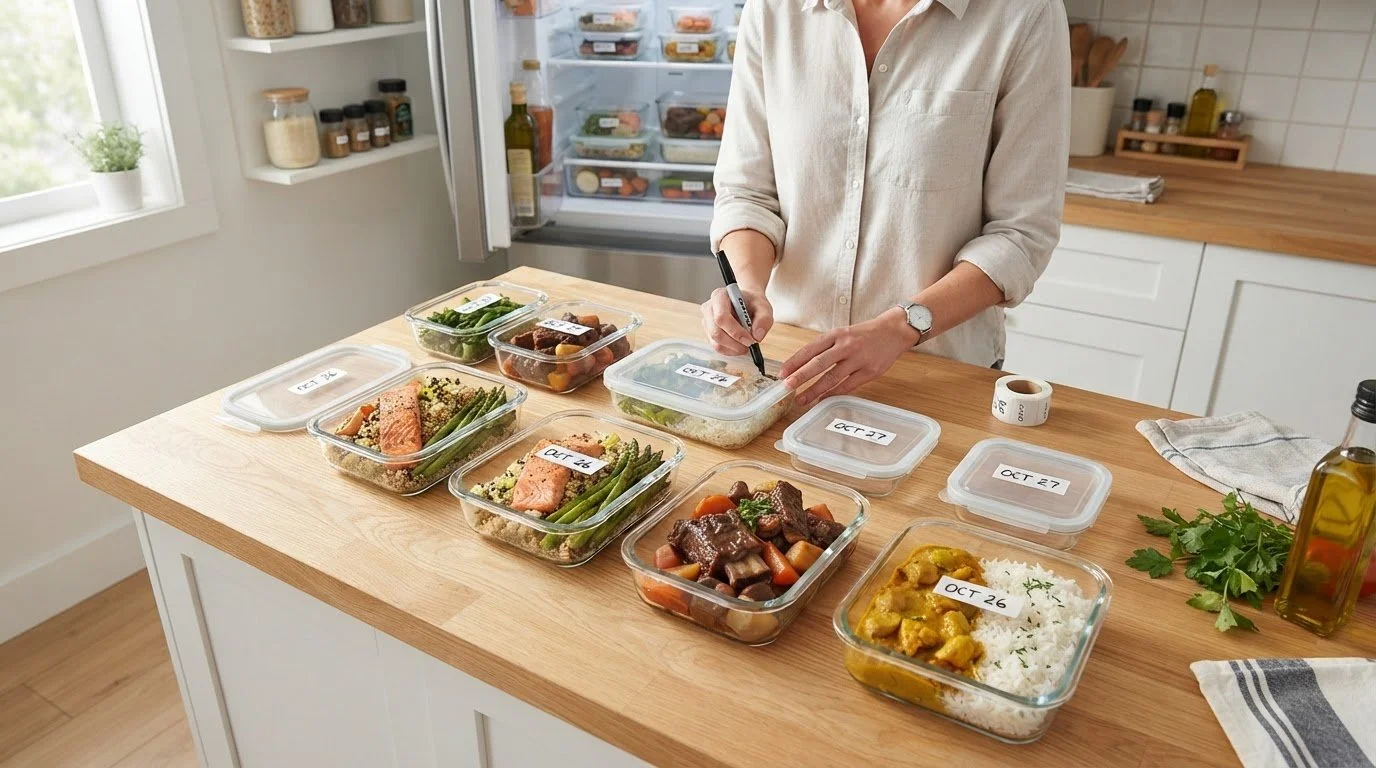
Refrigerate perishable food promptly, keep it covered and return portions you are saving to the fridge without delay.
Freeze portions you will not use within the stated refrigerated window, using airtight, freezer-safe packaging.
Thaw in the fridge, or use a microwave defrost setting only when you can reheat the meal straight afterwards.
Choose the reheating method to suit the food: microwave for convenience, oven for steady heat, or hob for soups and sauces.
Keep crisp, fresh and cold components separate, and check the centre of the meal before serving.
Start with the meal’s storage and heating instructions
Start with the instructions supplied for the meal. The chef’s method, ingredients and packaging determine how long the dish should be kept and which reheating approach will best protect its flavour and texture.
Packaging is part of that guidance, not a universal appliance dish. Use a tray, lid or film in an oven or microwave only if it is designed for that use; transfer the food to an oven-safe dish for oven reheating, and use a microwave-safe container when needed.
When a microwave cover is intended for use, vent it as directed rather than sealing it over the food. This lets steam escape and prevents pressure from building beneath the cover.
For an opened meal, portion with clean utensils and return anything you are keeping to refrigeration promptly. This limits handling and helps keep the remaining food in good condition.
Luxury Meal Preparation offers chef-prepared, nutritionally balanced dishes that are beautifully packaged and tailored to clients’ preferences and schedules. That personal approach makes the meal’s own storage and heating guidance the natural place to begin.
Refrigerate portions promptly and keep them cold
The Food Safety and Inspection Service, USDA, advises that leftovers must be refrigerated within two hours of cooking food or after it is removed from an appliance keeping it warm.
Divide a large quantity into shallow portions before chilling. Smaller portions release heat more quickly than a deep container, while a covered or airtight container helps limit contamination and drying.
Keep the fridge at 5 °C or below and return uneaten portions promptly rather than leaving them out while you eat or prepare other food. For cold storage, the Better Health Channel recommends a fridge temperature of 5 °C or below and a freezer temperature below -15 °C.
Food left in the 5 °C to 60 °C temperature danger zone for more than four hours should be discarded if it is high-risk food. Chilling it again does not reverse the time it has spent in that range.
Freeze meals you will not eat within their storage window
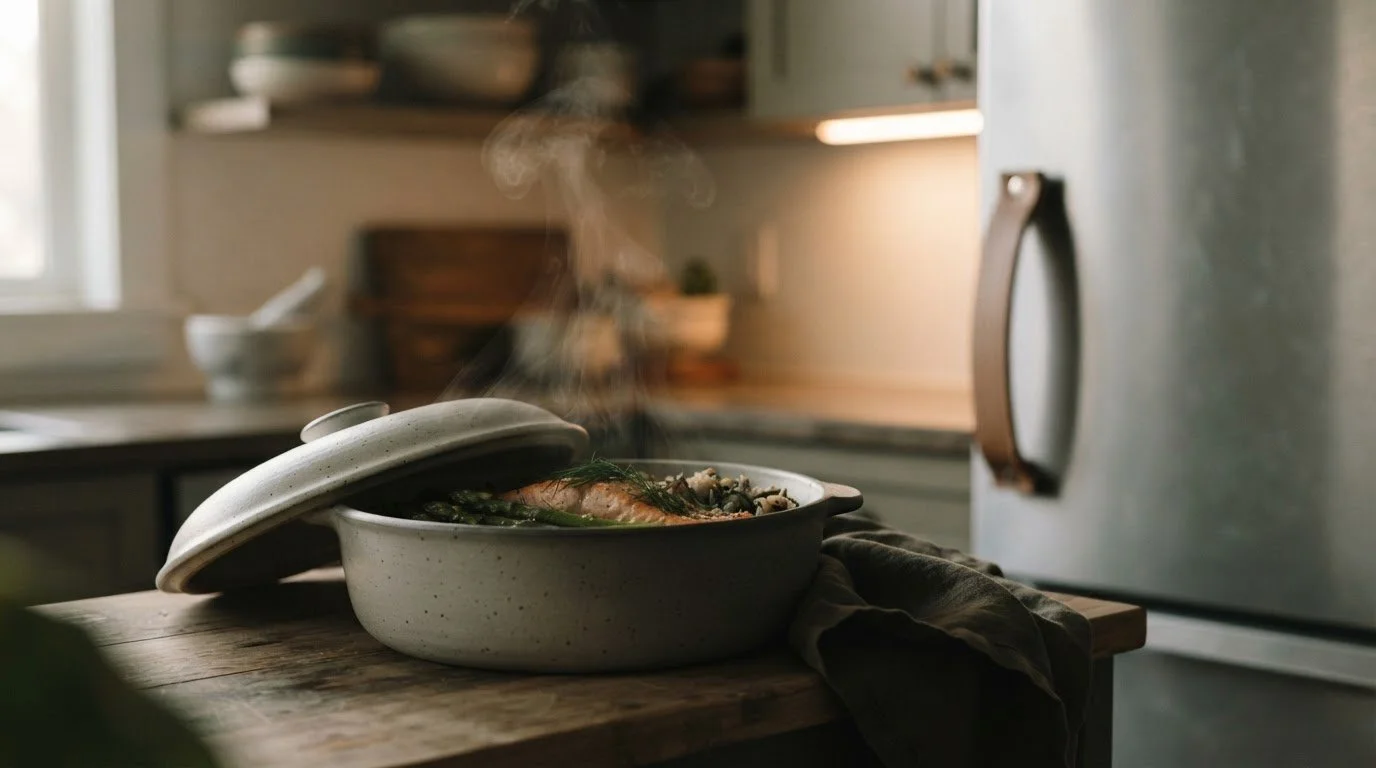
If you will not eat a portion within the meal’s stated refrigerated storage window, freeze it promptly. Freezing helps preserve quality, while leaving a meal too long in the fridge can affect both its safety and its eating quality.
Choose a freezer-safe airtight container or suitable wrapping, remove excess air and leave a little room if the food may expand. Divide meals into individual portions where practical, so you can thaw and heat only what you plan to eat.
Label each portion with the dish and the date before it goes into the freezer. That small habit makes it easier to use older freezer meals first and reduces the chance of leaving them so long that freezer burn dulls their texture.
Keep the freezer at the cold-storage temperature noted above, and use the meal’s own guidance as the best indication of how long it should be kept. Different dishes respond differently to freezing: sauces may separate slightly, while vegetables with a high water content can soften after thawing.
Did You Know?
Within 2 hours of cooking food or after it is removed from an appliance keeping it warm, leftovers must be refrigerated.
Source: Food Safety and Inspection Service, USDA
Thaw safely before reheating
Thaw frozen meals in the fridge, ideally in a covered container that catches any liquid. A worktop is not a suitable place to leave food thawing, as the outside can warm while the centre remains frozen.
A microwave defrost setting is useful when you can reheat the meal immediately afterwards. If the meal’s instructions explain how to cook it from frozen, follow that method rather than thawing it first.
If a meal arrives or is found thawed, keep it chilled and use it promptly if it has remained cold. Discard it if it has been warm for too long or its handling cannot be established safely.
Freezing separate portions also makes thawing more controlled: you can take out just the amount needed, rather than warming and cooling a larger dish repeatedly. This is particularly useful for meal prep when different portions will be eaten on different days.
Choose a reheating method that suits the dish
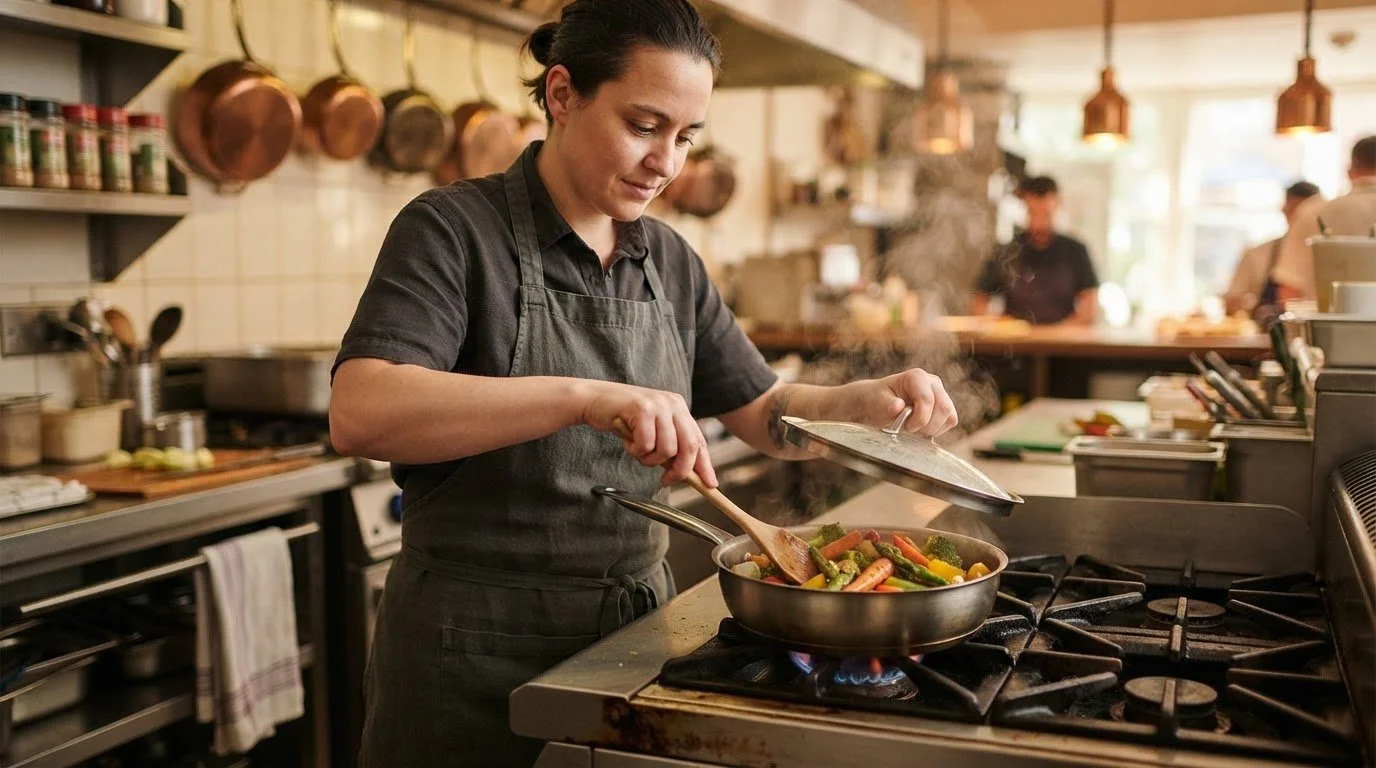
Microwaves heat quickly, but the energy can distribute unevenly through a dense or layered meal. Use medium power, cover the food loosely with a vented lid, and stir or rotate it partway through when the dish allows, helping reduce cold spots without overcooking its edges.
An oven gives food gradual, even heat and suits dishes that benefit from a steady warm-through. Use an oven-safe dish, cover food that is prone to drying, then uncover it briefly at the end if the surface needs refreshing.
For suitable soups, sauces and soft dishes, use a hob over gentle heat and stir often. Frequent stirring moves the warmer food away from the base, helping the dish heat evenly and preventing it from catching.
A small splash of water or stock can restore moisture to foods likely to dry out. Avoid prolonged high-power heating, especially with lean protein, since intense heat can toughen it before the centre is warm.
To restore crispness, keep crisp components away from steam and sauce during reheating. A brief finish in a dry oven, or an air fryer where suitable for the food, can refresh their surface after the rest of the meal is hot.
Heat mixed components separately where needed
A meal with crisp, saucy and fresh elements may need more than one reheating approach. Warm soft or saucy components gently, and reheat crisp items separately using a dry oven or air-fryer method when suitable.
Keep fresh greens, dressings and cold toppings aside until the hot components are ready. Add them just before serving, so leaves stay lively and dressings retain their intended consistency.
Fish and lean protein benefit from gentle heat. Stop as soon as the centre is hot throughout, and refresh any crisp element briefly afterwards rather than microwaving it beside sauce or vegetables.
These small separations preserve contrast: a warm, tender centre, a crisp finish and fresh toppings that still taste bright. The aim is not to rework the chef’s preparation, but to bring each element back with care.
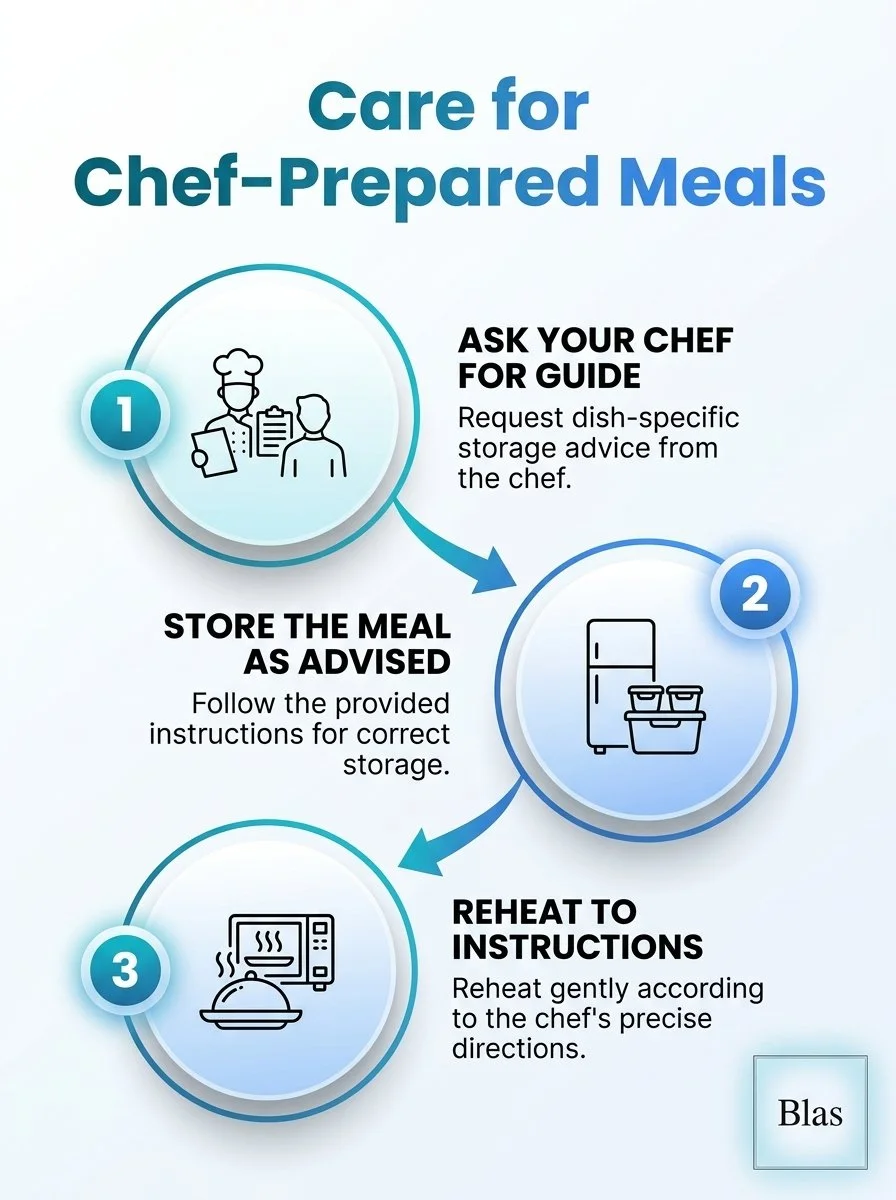
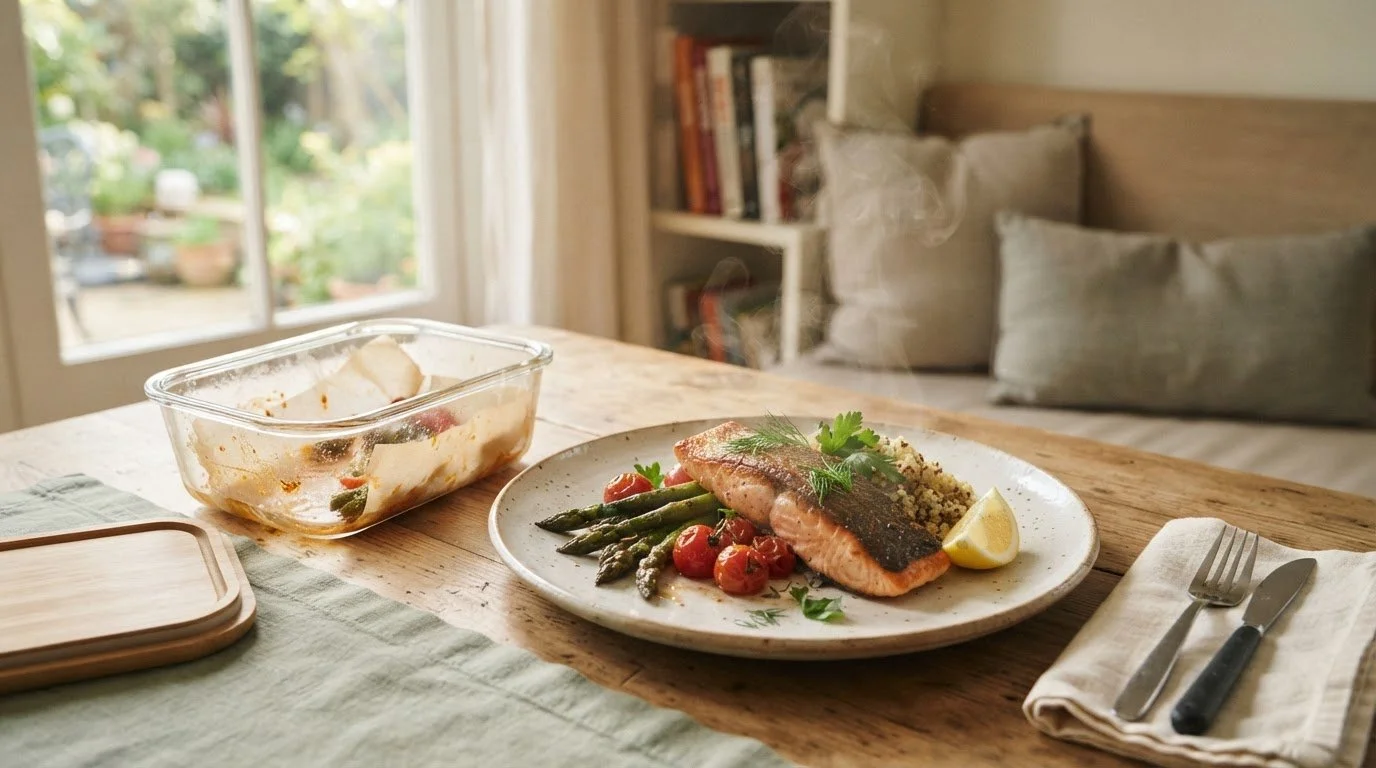
This infographic shares practical tips for storing and reheating chef-prepared meals with care. Follow the steps to help preserve quality and enjoy meals safely.
Did You Know?
Food poisoning bacteria grow and multiply fastest in the temperature danger zone between 5 °C and 60 °C.
Source: Better Health Channel
Check the centre before serving
Check the thickest part and the centre of the portion with a clean food thermometer. When reheating leftovers, be sure they reach 165° F as measured with a food thermometer, advises the Food Safety and Inspection Service, USDA.
With a microwave, stir where possible, rotate the dish and let it stand briefly so heat can spread through the food. Check more than one spot, since a hot surface does not guarantee that the centre is free of cold spots.
If any area is not hot throughout, continue heating in short bursts and check again. Reheat only the portion you intend to eat, rather than repeatedly cooling and warming the same food.
For a meal prepared and served as part of a considered occasion, Private Chef in Glasgow & Scotland is a bespoke service that prepares, serves and clears away a tailored meal in the client’s home. Careful reheating at home follows the same principle: each detail matters, from the food’s centre to the moment it is served.
Frequently Asked Questions
Can a chef-prepared meal be refrozen after it has thawed?
A meal thawed in the fridge and kept cold can be refrozen, although its texture and flavour may be less refined after another freeze and thaw. Do not refreeze a meal that has been warm for too long.
Does freezer burn make a meal unsafe to eat?
Freezer burn affects quality rather than making food unsafe, provided the meal has remained frozen. It can leave dry, discoloured patches, which may be trimmed away if the rest of the dish is in good condition.
Should I reheat cooked rice differently from other prepared meals?
Rice needs particular care after cooking because Bacillus cereus spores can survive the cooking process. Reheating cannot reliably undo unsafe storage, so the meal’s cooling and storage guidance matters as much as the final heat.
How long should I let a meal stand after microwave reheating?
For a single portion, a one to two minute rest is a practical starting point; a dense or larger portion may need longer for heat to spread evenly. Check the centre after standing rather than relying on time alone.
How long can leftover cooked meals stay in the fridge?
The Food Safety and Inspection Service, USDA, says leftovers can be kept in the refrigerator for 3 to 4 days or frozen for 3 to 4 months. For a chef-prepared meal, use its specific storage window when that differs from general leftover guidance.
Guidance
How to Store and Reheat Chef-Prepared Meals with Care is a matter of following the dish’s own guidance, keeping portions cold, and choosing a reheating method that suits each component. With prompt storage, gentle heat and a final check at the centre, a prepared meal can retain more of its intended flavour, texture and balance.
Every detail considered. Every portion handled with intention. The result is a refined meal, ready to be enjoyed with warmth and ease.