What a Private Chef Needs from Your Home Kitchen depends on the service: a weekly meal-prep visit, a plated dinner and a lively gathering each call for a different arrangement. A considered kitchen setup, agreed in advance, gives the chef room to work safely and lets the host become a guest at their own table.
Key Takeaways
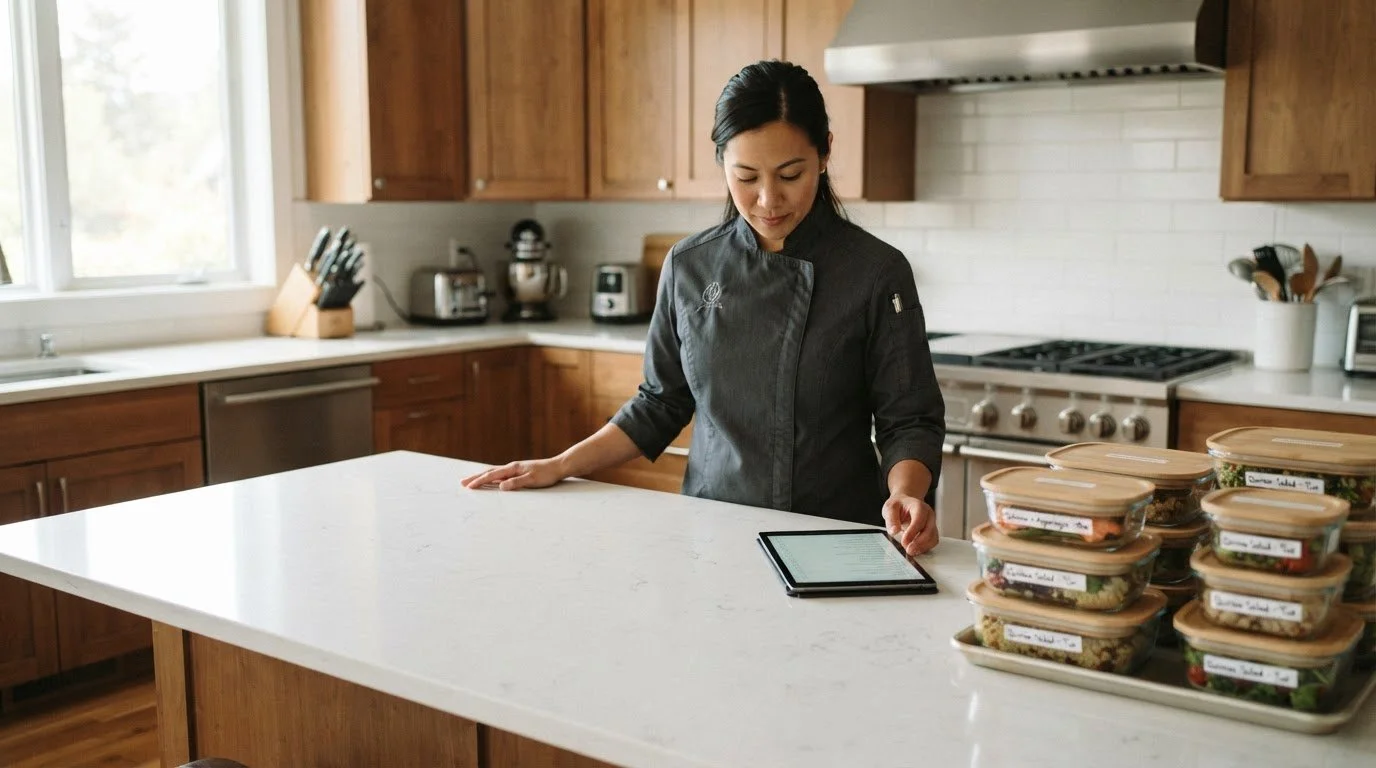
Match the kitchen to the occasion: batch cooking needs room for several dishes and portions; a dinner party needs space to finish and plate; a reception needs a clear plan for food and guest flow.
Make the working area usable: clear a continuous worktop, the sink, the route to the hob and a place for ingredients and equipment.
Agree who supplies what: discuss everyday cookware, knives and utensils with your chef. A home kitchen does not need a complete professional kit.
Check your heat sources: test the hob and oven, mention induction or other equipment constraints, and agree how the menu will work with the appliances available.
Plan safe preparation and storage: share allergies and cross-contamination concerns early, and make room for ingredients and prepared food in the fridge or freezer.
Set expectations for service: agree arrival, kitchen access, tableware, clearing away and what happens to leftovers. Explore the private chef services available for weekly meal preparation, dinners and events.
Tailor the setup to the kind of service
Start with the menu and the shape of the occasion. The kitchen requirements for a personal chef preparing meals for the week are different from those for a chef finishing a tasting menu or serving guests who are moving between rooms.
| Service | Kitchen priorities | Why they matter |
|---|---|---|
| Weekly meal preparation | Clear worktops, usable hob space, and room in the fridge or freezer | Several dishes may need to be cooked, portioned and stored efficiently. |
| Plated dinner | Space near the cooker for finishing and plating, plus a clear route to the table | Plates can be prepared and carried without crossing the active cooking area. |
| Reception or larger event | An agreed food format and service route | Canapés, a buffet and a seated meal each shape kitchen work and guest movement differently. |
For weekly batch cooking, clear enough space to work through multiple dishes and pack portions without moving appliances between every task. For a plated dinner, keep a surface close to the hob free for final touches, and plan how serving dishes will travel from kitchen to table.
When guests will arrive at different times or move between spaces, settle the food format and service flow early. A private chef for a dinner party prepares and serves a customised meal in the host’s home, then handles kitchen cleanup and organisation—an arrangement that helps the host spend more time with guests.
For a considered approach to hosting, read our guide to hosting at home with a private chef. If the occasion is a milestone celebration, the format and running order can be shaped around the guests and the event, as described in our guide to planning a celebration with a private chef.
Clear a safe, usable preparation space
Room to prepare food without household clutter or foot traffic interrupting the work gives a private chef a safer, more practical workspace. Clear one continuous section of worktop for chopping and assembly, rather than leaving only narrow gaps between appliances, stored items and ingredients.
Keep the sink, main work surface and route to the hob accessible. Move personal belongings and anything that could obstruct the handling of hot pans, sharp knives or heavy dishes.
Agree where the chef can place bags, ingredients and any equipment they bring. During busy stages, keep household cooking and guest activity away from the main preparation area; a clear boundary makes it easier to work safely and maintain an orderly kitchen.
If you are new to the experience, what it is like to have a private chef cook in your home includes arriving, setting up and working in a home kitchen. The same private chef service also plans menus, sources ingredients, prepares and cooks meals, presents and plates dishes, and manages kitchen cleaning and organisation—useful context when deciding how much space and storage to make available.
Gather everyday cookware and preparation tools
Most home kitchens already have useful essentials. A frying pan, a saucepan or two, and an oven-safe dish cover many everyday methods, from frying and simmering to baking or finishing a dish in the oven.
Match the vessels to the planned menu instead of buying specialist pans before the chef has confirmed what will be cooked. A deep saucepan suits liquids and grains; a broad frying pan gives ingredients room to brown; an oven-safe dish supports dishes that move from hob to oven or cook entirely in the oven.
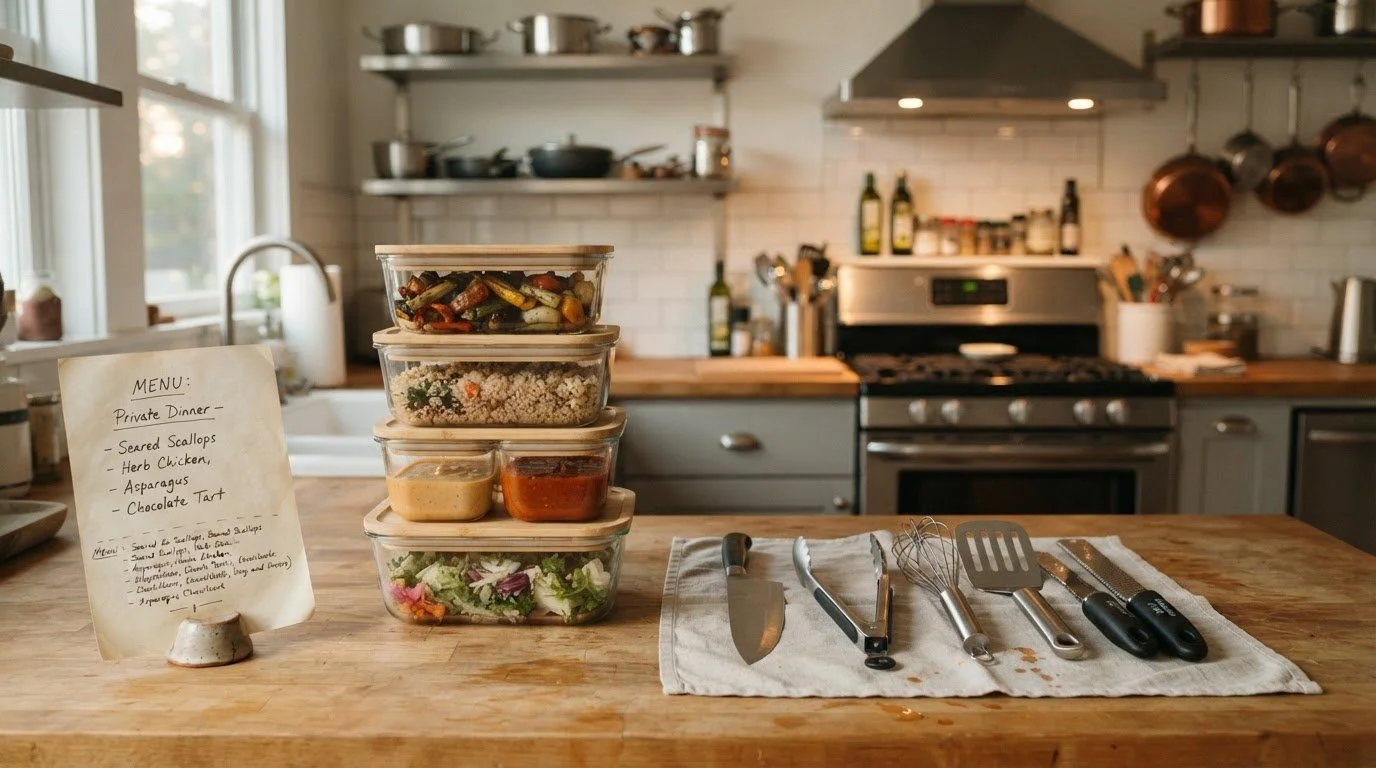
Make a sharp chef’s knife and a stable cutting board available if that is part of the agreed setup. Everyday prep tools such as tongs, a spatula, a wooden spoon, a whisk and a peeler support common tasks without taking up space with equipment the menu may never need.
Agree which personal knives or specialist tools the chef will bring and which household items they expect to use. The chef may bring specialised equipment for a particular menu, but your kitchen does not need a complete professional kit.
If the chef will plate or serve using your dishes, set aside suitable serving spoons and heat-resistant oven gloves. Our guide to private dining etiquette and service at home offers further perspective on the practical details that help service feel polished yet relaxed.
Did You Know?
Perishable food should be refrigerated within 2 hours, or within 1 hour when the outside temperature is above 90 °F (32.2 °C).
Source: United States Department of Agriculture, Food Safety and Inspection Service
Check the hob, oven and other appliances
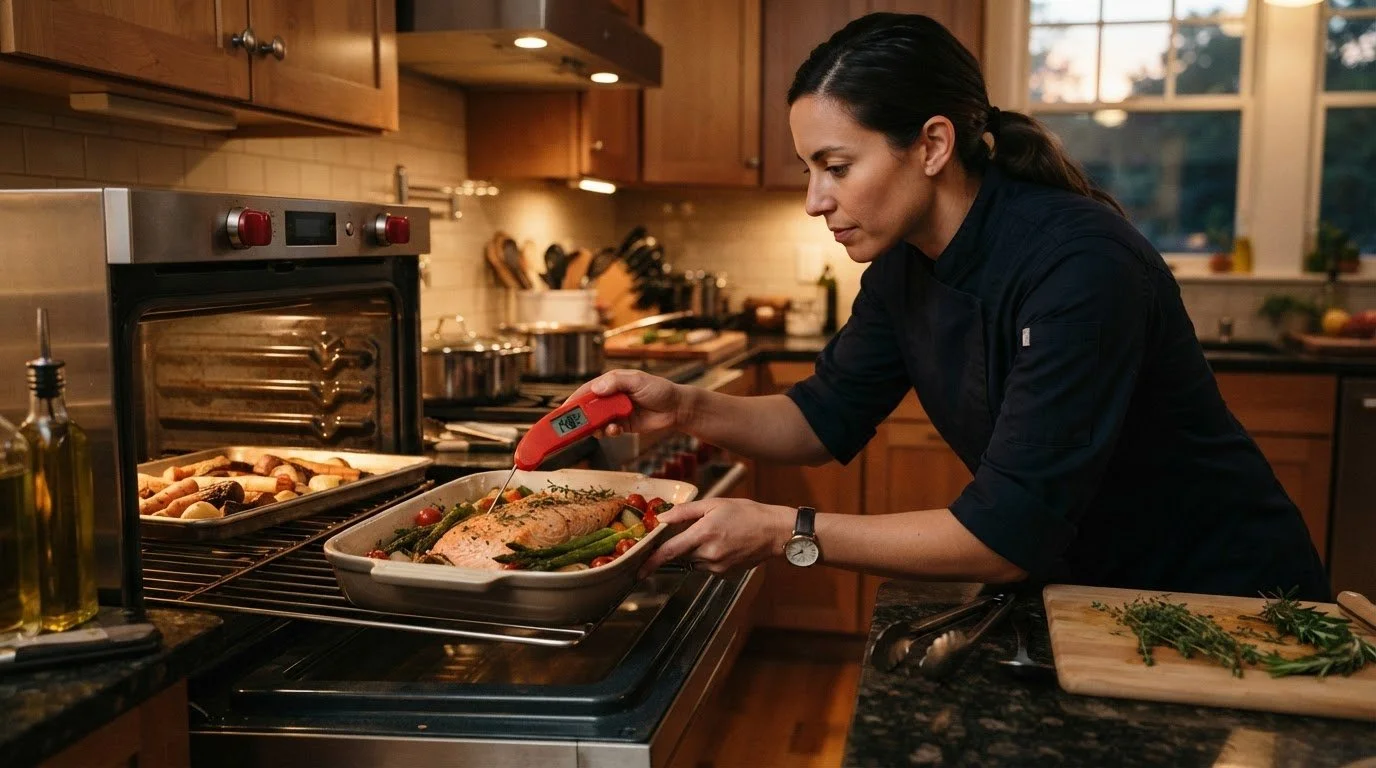
Test the hob and oven controls before the visit, and tell the chef about any unreliable burner, uneven oven heating or appliance that will be unavailable. A dependable heat source helps the chef plan cooking times and choose the right methods for the menu.
Mention the type of hob, including whether it is an induction top. Induction heats compatible cookware through a magnetic field, so pans need a magnetic base to work on it; a pan that works on gas may not be suitable for induction.
If the menu relies on equipment your kitchen does not have, agree a workable approach in advance. That might mean adjusting the dishes or discussing whether the chef will bring suitable specialist equipment.
For meal preparation, ask which appliances the agreed dishes require; not every recipe calls for a microwave, food processor or scales. When a particular appliance is essential to a dish, knowing that ahead of time avoids last-minute changes to the cooking plan.
Make hygiene, allergies and cleanup clear
Share allergies, dietary requirements and cross-contamination concerns before menu planning begins. These are design parameters, not inconveniences: early, clear information helps the chef plan ingredients and preparation with care.
Provide clean work surfaces, access to handwashing and clean kitchen towels. Agree how shared knives, cutting boards and utensils will be handled when separating allergens or keeping raw ingredients apart from food that is ready to eat.
Keep the sink and a suitable supply of washing-up liquid and cleaning materials available for ordinary kitchen use. Ask in advance whether the chef will wash dishes, clean down the work area and organise the kitchen after service; the final arrangements depend on the service agreed.
Decide what should happen to leftover ingredients and prepared food. The chef and host can agree whether ingredients stay in the home, whether finished dishes are packed for later, and whether the household will provide containers.
Make room for ingredients and prepared meals
Clear refrigerator space for incoming ingredients as well as finished dishes. For batch cooking, make room before the visit for the number and size of portions planned, so packed meals can be stored without crowding out the ingredients still being used.
If meal prep containers will be used, set out clean, food-safe containers and agree their size and type with the chef before buying a supply. Containers need to suit the portions and the way the meals will be stored, not simply fit whatever cupboard space is available.
Discuss which pantry staples and cooking ingredients the menu will use, and who will provide them. Wait until the menu is agreed before stocking specialist ingredients or buying gadgets; a bespoke plan should guide what comes into the kitchen.
For freezer storage, clear space in advance and agree which dishes are suitable for freezing and how portions should be organised. Labelled, consistently sized portions are easier to identify and use later, especially when several dishes are prepared at once.
Storage is part of the service plan, not an afterthought. The private chef service described above brings together menu planning, ingredient sourcing, cooking and kitchen organisation, so agreeing how ingredients and prepared meals will fit into your home helps each stage run smoothly.
Did You Know?
The “Danger Zone” is a potential risk for cold food that goes above 40 °F (4.4 °C) and hot food that falls below 140 °F (60 °C).
Source: United States Department of Agriculture, Food Safety and Inspection Service
Coordinate access and the service setup
Agree the arrival time, entry arrangements and where the chef can unload ingredients and equipment. If parking, a shared entrance or building access is restricted, explain the practical details in advance so the setup can begin without disrupting the household.
Discuss how much of the kitchen the chef will need and whether household members or guests will use it during preparation and service. A clear understanding of the working area helps everyone move comfortably around the home.
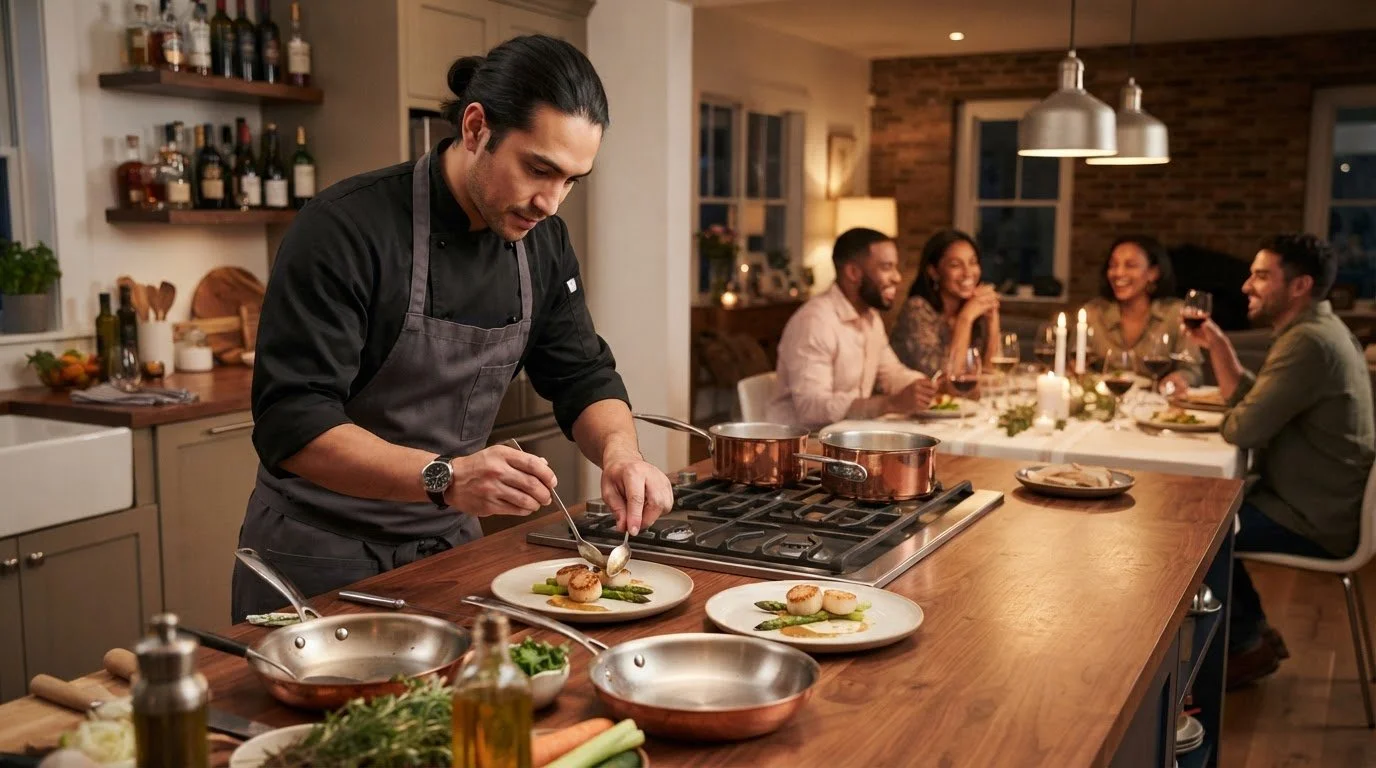
For a dinner party, agree how food will travel from kitchen to table and whether the host will provide plates, cutlery and serving pieces. A clear route and a planned place for each dish support smooth service, especially when courses are served in sequence.
Blas Dining’s private chef service includes tailored menus, preparation, service and clearing away. Agree the specific service flow and cleanup expectations for your occasion, so everyone understands what happens before guests arrive and after the final course.
Frequently Asked Questions
Can guests watch the chef cook, or should they stay out of the kitchen?
Guests can enjoy a brief look or conversation if the chef welcomes it and the work area remains clear. For a more interactive moment, agree on a safe place for guests to stand before service begins.
Should I provide plates, cutlery and glassware for a private chef?
Ask which tableware is included in your arrangement, then set aside any household pieces the chef will use. Glassware is a separate consideration from plates and cutlery, so mention what you have available for the drinks you plan to serve.
Should pets be kept out of the kitchen while food is being prepared?
Yes, keeping pets away from active preparation helps protect them from hot surfaces and sharp tools, and keeps food and equipment undisturbed. Choose a comfortable room or enclosed area for them before the chef arrives.
Can children help with any part of the cooking?
Yes, if the chef agrees and chooses a task suited to the child’s age, such as washing herbs or arranging a cold garnish. Keep children away from hot pans, sharp knives and raw ingredients unless the chef has planned and is supervising a specific activity.
What should I do if an appliance stops working on the day?
Tell the chef as soon as you notice the problem, before the affected equipment is needed for cooking. Do not use a hob or oven that appears unsafe; the chef can decide whether the menu or cooking sequence needs to change.
The right setup
A private chef can work well in a kitchen with a clear, usable workspace, reliable heat, suitable everyday tools, clean preparation conditions and enough room for ingredients and prepared food. The right setup is not a professional kitchen—it is a considered one, shaped around the menu and service.
Agree who brings which tools, how the kitchen will be shared, and what happens with dishes and leftovers. With those details settled, the chef can focus on the food, the service can unfold with grace, and the host can enjoy the table.
Elevate Your Private Dining to the Next Level
Contact Blas Dining today.